The Swiss Signing Postponed: A Line-by-Line Breakdown of the June '26 Iran-US MOU
Geopolitics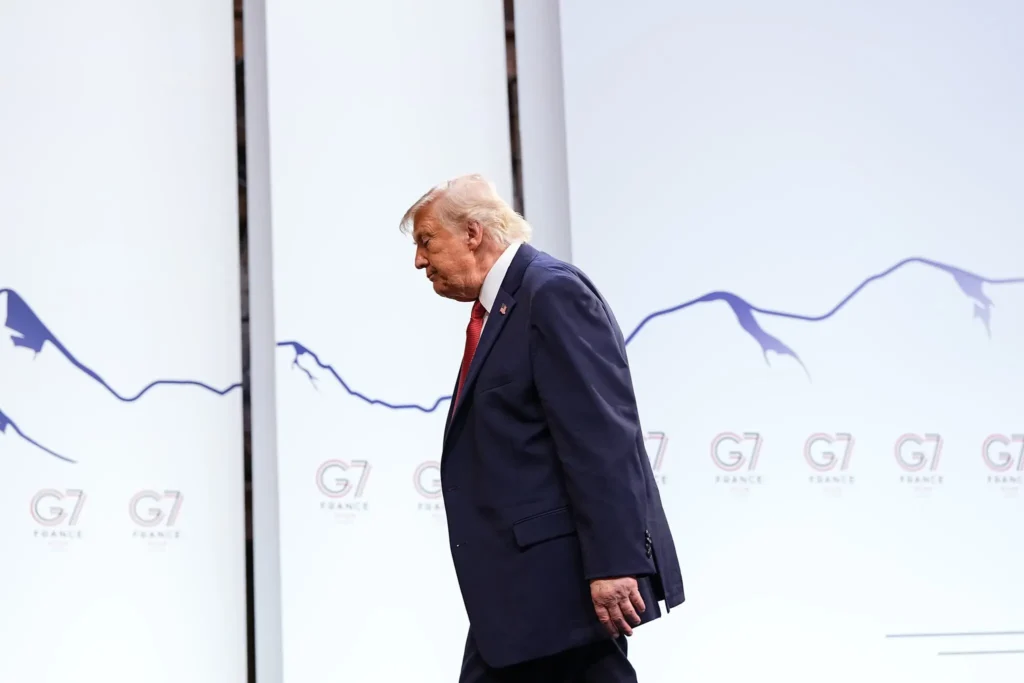
The grade on the Islamabad MOU, paragraph by paragraph: A+ for Iran. Tehran gets immediate sanctions relief on oil exports and access to frozen funds, the expulsion of US military readiness from its waters and airspace, $300B to rebuild its cities and operational infrastructure, and formal recognition of an expanded role in administering the Strait of Hormuz.
Iran is better off now than it was pre-Operation Epic Fury. What do average Americans get? A few dollars off at the pump, conveniently timed five months ahead of the midterms. The US and allied governments get what? Promises of nuclear drawdown, more "we'll talk" from the Iranian negotiations, and the reconstruction bill.
The document is divided into 14 paragraphs. Five fall in the "now" bucket — items to take effect immediately and upon which the effectuation of the rest of the terms, and an eventual final deal, rest. The other nine are "later" items — deferred according to a 60-day clock that history suggests rarely runs on time. What follows breaks the MOU into these two categories and explains the context and likelihood of successful adherence to each.
The Now Items
The United States of America and the Islamic Republic of Iran and their allies in the current war, by signing this MOU, declare the immediate and permanent termination of military operations on all fronts, including in Lebanon, and undertake from now on not to initiate any war or any military operations against each other, and to refrain from the threat or use of force against each other, and ensuring the territorial integrity and sovereignty of Lebanon. The final deal will confirm the permanent termination of the war on all fronts, including in Lebanon, and other provisions of this paragraph.
Paragraph 1
It’s comical that the language opens with “the United States and Iran and their allies.” The agreement is between the US and Iran, and it's safe to assert that the leaderships of both countries have designed the document in good faith. However, Israel, one of the unnamed allies, has shown time and again its willingness and ability to deliberately misbehave at the cost of the interests of the United States, despite its dependence on American weapons, aid, and public/institutional support.
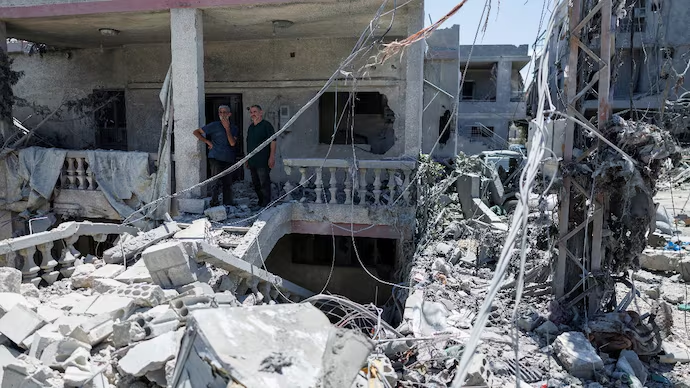
Of course, the US won’t bomb Lebanon. It's not in the American interest, and the US cares little about extra-governmental threats in a failed Levant state — especially in the shadow of global oil supply disruption in the Gulf. However, I'd leverage my net worth ten times over to bet that Israel bombs Lebanon sometime between the signing of this MOU and sixty days after, likely multiple times. In fact, an earlier version of this article written yesterday, June 18th, included the exact same sentence, and since then, Israel did in fact bomb Lebanon and cause the postponement of the official MOU signing in Switzerland. It likely won't be the Israeli last attempt at souring negotiations as long as the agreement remains in its current form.
Israel benefits from an Iran much weaker than the MOU leaves it. A resolved conflict pushes Netanyahu one step closer to the judicial and public reckoning he was facing before the October 7, 2023 invasion. It's irresponsible to believe that Israel will not work to undermine this version of the deal. The real question is whether Trump will exert public and private control over Netanyahu. The two have had public breaks in the past, and Trump, with his populist, America-First, outsider brand of geopolitics, is the most likely candidate for the first president to cause a major disruption in the US-Israel relationship — surprising given his donor mix.
Immediately upon the signing of this MOU, the United States of America will begin the removal of its naval blockade, and any disturbances or impediments against the Islamic Republic of Iran, and will fully end the naval blockade within 30 days. During this period, the traffic of vessels will be in proportion to the numbers of prewar traffic being restored by the Islamic Republic of Iran. The United States of America further undertakes to remove its forces from the proximity of the Islamic Republic of Iran within 30 days after the final deal.
Paragraph 4
Although the MOU stipulates a complete removal of the US military blockade in the Strait, it's incredibly unlikely US CENTCOM will find it strategically justifiable to sacrifice all military readiness without greater assurances against a return of IRGC maritime violence. This section screams of a who-blinks-first dynamic. In theory, both sides let go at the same time, but pragmatically we've likely not seen the last of violence and shipping disruption in the Strait.
Upon the signing of this MOU, the Islamic Republic of Iran will make arrangements, using its best efforts, for the safe passage of commercial vessels, with no charge for 60 days only, from the Persian Gulf to the Sea of Oman and vice versa. The traffic of commercial vessels will immediately start, and considering the needs for removing the technical and military obstacles, and demining by the Islamic Republic of Iran, will be instated within 30 days. The Islamic Republic of Iran will conduct dialogue with the Sultanate of Oman to define the future administration and maritime services in the Strait of Hormuz in discussion with other Persian Gulf littoral states in line with the applicable international law and the sovereign rights of coastal states of the Strait of Hormuz.
Paragraph 5
Insurance markets have already repriced down on the leaking of this MOU. Demining is a complicated process — even more so in the context of a destroyed naval force and fragmented IRGC — and shipping costs will jump right back up on the first report of a ship striking a forgotten mine.
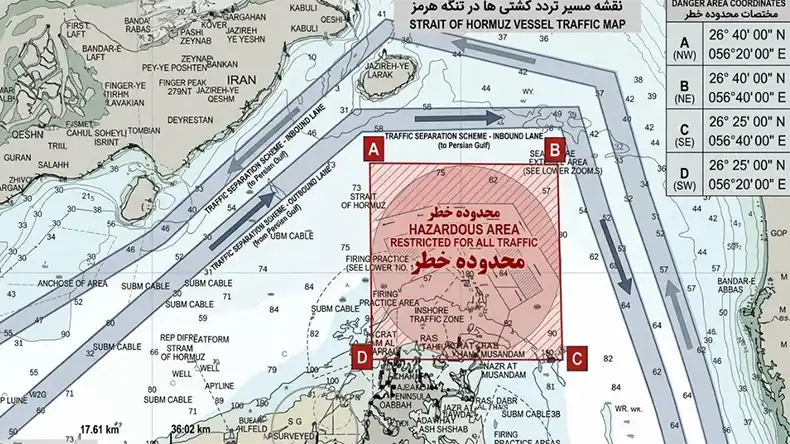
Regardless, the more consequential detail is the formal recognition of a joint arrangement with Oman over the Strait’s future administration — effectively a US recognition of a legitimized toll-based authority structure. Iran couldn't have dreamed of such an arrangement before Operation Epic Fury. Trump and his cabinet decried for weeks in the media the ludicrosity of such a demand by Iran. And yet, here is Trump handing Iran more formal authority over Hormuz than it had before the war started.
The United States of America undertakes that immediately upon the signing of this MOU and until the termination of sanctions, U.S. Department of Treasury will issue waivers for the export of Iranian crude oil, petroleum products, and derivatives, and all associated services, including banking transactions, insurances, transportation, etc.
Paragraph 10
Another reason Iran is better off now than it was pre-war. With sanctions peeled away, Iran no longer needs to sell to China at the steep discounts they were forced to endure for years — full-price sales, diversified consumer base, normal banking and insurance channels, no shadow fleet required. Another gift.
The United States of America undertakes to make fully available for use the frozen or restricted funds and assets of the Islamic Republic of Iran upon the implementation of this MOU. The United States of America and the Islamic Republic of Iran will mutually agree on the procedures related to the release of these funds during negotiations. Such funds, whether obtaining the original account or transfer, shall be made fully usable for payment to any ultimate beneficiary designated by the Central Bank of the Islamic Republic of Iran. The United States of America undertakes to issue all necessary licenses and authorizations accordingly.
Paragraph 11
Again, immediate access to funds for Iran. An obvious attempt at cash as negotiation in the face of failed attempts to break the Iranian will militarily.
The Later Items
The United States of America and the Islamic Republic of Iran undertake to respect each other’s sovereignty and territorial integrity and to refrain from interfering in each other’s internal affairs.
Paragraph 2
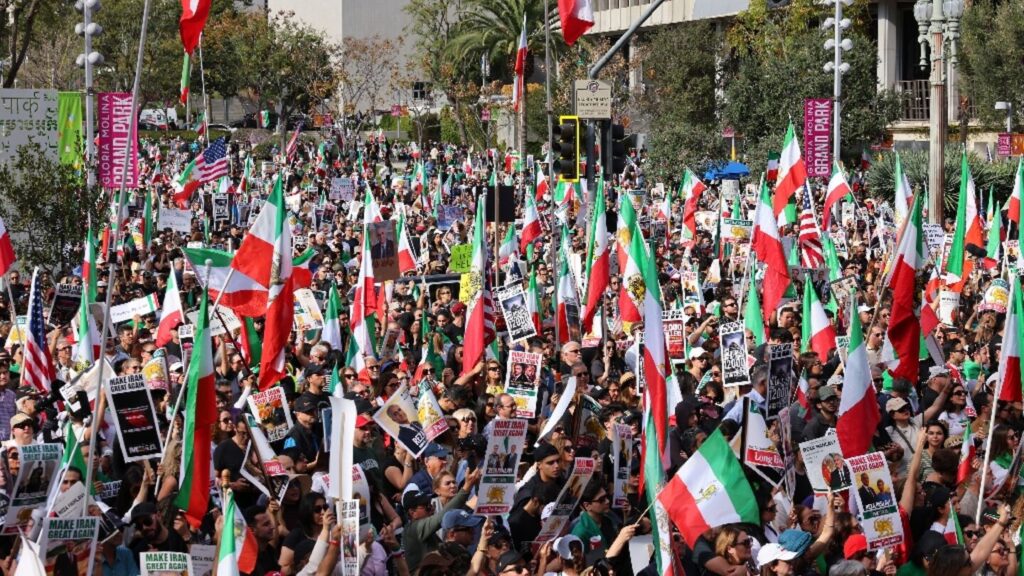
A bit laughable on its face. This is a direct reference to the covert and overt American and Israeli initiatives aimed at fostering unrest and supporting internal Iranian opposition to the current regime — the “we’re here to help” rhetoric from early in the war, the regime-change talk, the media campaign supporting protesters. Trump wholeheartedly pursued that strategy, regardless of the backtracking his cabinet has done in the recent past. It was always a tool to pressure policy change around the nuclear file, the Strait, and the broader Israeli agenda, alongside the bombing of key personnel and infrastructure. It just didn’t succeed — and its success would have been predicated on a much longer campaign for which there is insufficient American political and public support. The implications of this paragraph on a commitment to permanently stay any ground invasion or overt aid for internal regime opposition are credible. A cessation of American and Israeli covert activity supporting the readiness of opposing internal factions is, however, very unlikely.
The United States of America and the Islamic Republic of Iran commit to negotiating and achieving the final deal in maximum 60 days, extendable with mutual consent.
Paragraph 3
Iran benefits from dragging things out. Time and again, they've proven their tolerance for pain and ability to remain patient are much greater than their adversaries'. With the immediate advantages for Iran already secured — money, sanctions relief, oil revenue, Strait authority — there’s zero incentive to rush final adjudication. It is unlikely Iran will make verifiable reductions in its nuclear program within the proposed 60-day window, given the capitulations they've already secured by offering but a promise to do so.
The United States of America undertakes with regional partners to develop a definitive, mutually agreed plan with at least USD 300 billion for the reconstruction and economic development of the Islamic Republic of Iran. The mechanism for the implementation of this plan will be finalized as part of a final deal within 60 days. All required licenses, waivers, and permissions needed for the relevant financial transactions will be granted by the United States of America.
Paragraph 6
Another group of "allies" as mentioned but not named in the MOU are the GCC countries. They were consulted neither before the implementation of Operation Epic Fury nor during the draft of this agreement. KSA, UAE, Bahrain, Kuwait and Qatar are more exposed to Iran than Israel. They've suffered heavily from damaged oil infrastructure, closed export routes, and now, according to Trump's public statements, the restitution bill for reconstructing damage caused by American and Israeli strikes inside Iran.
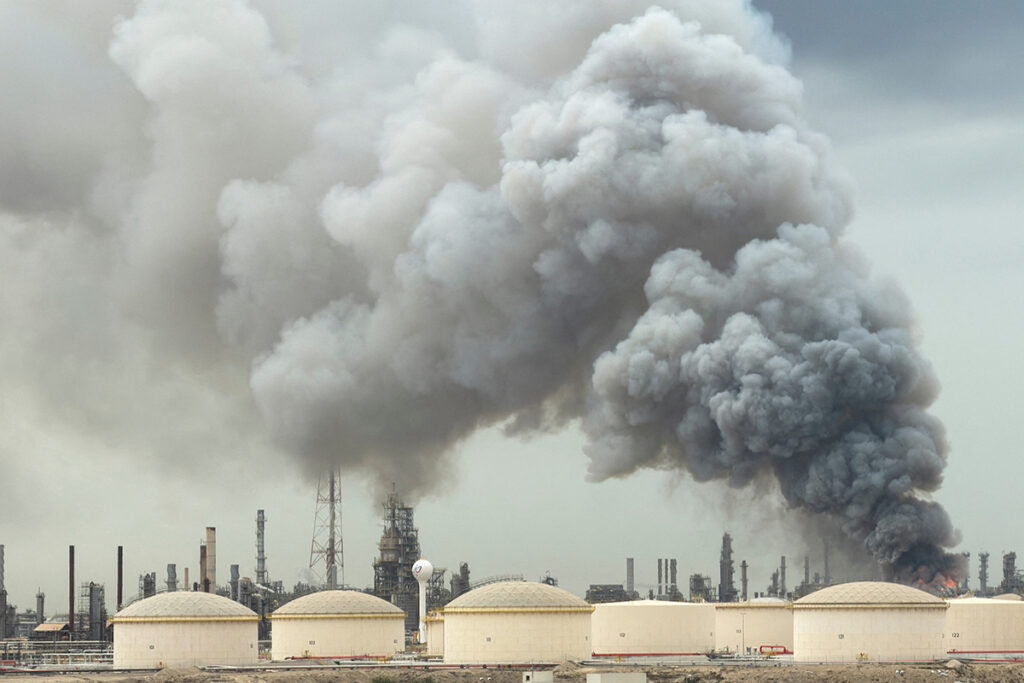
For decades, American administrations have worked to nudge the wealthy Gulf nations closer to alignment with American interests and toward normalization with Israel, and Trump had historic success doing so with the Abraham Accords in 2020. The sheikhs finally relented, only to be treated as well-laden fools not so much as a decade later. It's a substantial American betrayal of trust and goodwill, and the Arabs are likely to reference it heavily the next time they need a favor. That, or the relationship ends up even more damaged, and we're further away from coalition-building in the Middle East outside of Israel.
The United States of America undertakes to terminate all types of sanctions against the Islamic Republic of Iran, including the United Nations Security Council resolutions, IAEA Board of Governors resolutions, and all unilateral US sanctions, primary and secondary, in an agreed upon schedule as part of the final deal. The Islamic Republic of Iran and the United States of America acknowledge the critical importance of the sanctions termination issue above mentioned, and expressed their intentions to immediately address these issues in the negotiations in order to achieve mutual agreement on them.
Paragraph 7
Full sanctions relief. Everything. The entire architecture — UN, IAEA, and unilateral US measures. Promised away in exchange for what amounts to a pledge — a vague pledge — of no nuclear weapon, while Iran also collects reconstruction cash and expanded authority over Hormuz. It's well worth remembering Trump spent years calling the JCPOA the worst deal in history for handing Iran exactly this kind of relief in exchange for commitments and inspections.
The Islamic Republic of Iran reaffirms that it shall not procure or develop nuclear weapons. The United States of America and the Islamic Republic of Iran have agreed to resolve the disposition of stockpile enriched material pursuant to a mechanism that will be mutually agreed upon in accordance with the schedule mentioned in paragraph seven with the minimum methodology to be down-blending on site under the supervision of the IAEA. The two parties also agreed to discuss the issue of enrichment and other mutually agreed matters related to the Islamic Republic of Iran’s nuclear needs, based on a satisfactory framework being agreed upon in the final deal.
Paragraph 8
A no-nuke promise. "We'll get rid of, or maybe just down-blend, our nuclear material — eventually." The US gives Iran immediate relief now in exchange for promises to be fulfilled later.
Pending the final deal, the United States of America and the Islamic Republic of Iran agree to maintain the status quo. The Islamic Republic of Iran will maintain the current status quo of its nuclear program, and the United States of America will not impose any new sanctions and will not deploy additional forces in the region.
Paragraph 9
Again, just a promise: no nukes, for now. The one truly tangible thing the US gets out of any of this is the Strait reopening — which, in practical terms, is a few dollars off the price at the pump heading into the midterms.
The United States of America and the Islamic Republic of Iran agree that an executive mechanism will be established to monitor the successful implementation of this MOU and the future compliance of the final deal.
Paragraph 12
A vague executive mechanism, with no composition, authority, or enforcement specified anywhere in the text.
After signing this MOU, and subject to the beginning of the implementation of paragraphs 1, 4, 5, 10, and 11 of this MOU, and the continuing implementation of these measures, the United States of America and the Islamic Republic of Iran will start negotiations regarding the final deal exclusively on the other paragraphs.
Paragraph 13
This paragraph explicitly outlines the items upon which action is expected immediately and those held for a later date.
The final deal will be endorsed by a binding UNSC resolution.
Paragraph 14
The UN Security Council here functions less as an independent guarantor and more as a tool of the American government — a mechanism Washington can point to for legitimacy and, if needed, use again exactly as it did with the 2025 snapback, where the threat of reimposed UN sanctions was wielded as leverage over Tehran rather than as some neutral international check. Israel struck Lebanon again today. Israeli troops still occupy Lebanese territory. The signing in Switzerland scheduled for today has been postponed. Although American sources obfuscate the reasoning, international media reports Iran refused to attend in response to Israeli aggression in Lebanon — reasonable given the inclusion of cessation of violence and occupation in Lebanon as the first paragraph of the deal.
Regardless of the composition of the memorandum of understanding (MOU) between the United States and Iran, the greatest obstacle between the global citizenry and lasting peace in the Gulf, the Levant, and the Near East remains the same — an unchecked Israel. Before the signers could even depart for Switzerland, Israel created 47 new dead bodies in Lebanon (Al Jazeera). If the US administration seriously aims to create legitimate, near-term safety in the Hormuz shipping route, Trump will likely be forced to finally face the reality of Israel as a foreign country acting in its own self-interest rather than a daughter state of the American empire.
Sources: Full MOU text via Military Times. Additional reporting: CBS News, CNN, The Hill, Bloomberg, Reuters, Al Jazeera.
One Response